tert-Butyl Peroxyneodecanoate: An In-Depth Look
Historical Development
Over the past century, radical chemistry has pushed the boundaries of what’s possible in polymer science and organic synthesis. Tert-butyl peroxyneodecanoate emerged in the late twentieth century, right around the time polymer plants sought increasingly specialized initiators for low-temperature operation. Its development didn’t happen overnight; research teams spent years tweaking carboxylic chains and bridging commercial peroxides with higher safety margins. The pursuit of targeted molecular weights and more controlled reaction profiles drove engineers to look beyond the classic peroxides that had dominated polymerization for decades. This particular compound—given its branched alkyl structure combined with a neodecanoic acid derivative—met a growing industry demand for initiators that worked reliably in both bulk and emulsion systems, giving manufacturers more room to optimize their processing conditions.
Product Overview
Tert-butyl peroxyneodecanoate stands out for its effectiveness in kickstarting free-radical reactions. Organizations that make PVC, acrylics, and certain elastomers rely on this compound because it gets the job done cleanly, leaving behind little residue and offering good shelf life. Practical experience shows that handling it is easier than some older, more volatile peroxides. This product offers more predictable kinetics, which in turn means better control over polymer architecture during production—something any plant manager appreciates.
Physical & Chemical Properties
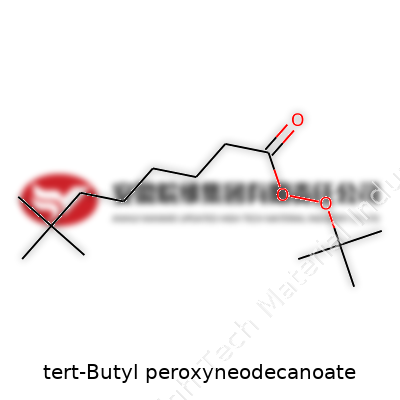
By nature, this compound appears as a clear, pale yellow liquid at room temperature, something I’ve seen firsthand on the plant floor. The smell sits somewhere between industrial solvent and detergent—a combination that always signals you’re near the real thing. Its molecular formula is C17H34O4, which places it in the organic peroxide family, though the branched structure keeps its active oxygen content high enough to matter for polymerization. With a molecular weight of 302.45 g/mol and a decomposition temperature hovering near 53°C, proper refrigeration is not optional—risking thermal runaway isn’t worth it. This peroxide does not dissolve well in water, but solutions in phthalates, aromatic hydrocarbons, or esters work perfectly for most applications.
Technical Specifications & Labeling
Manufacturers typically specify tert-butyl peroxyneodecanoate at a minimum active oxygen content near 7.0%. Storage requirements focus on temperature control—instructions label maximum storage temperatures at 20°C or below, for very good reasons given the compound’s tendency to decompose with heat. Packaging often relies on dark, UV-resistant containers with vented closures to reduce pressure buildup. International and regional regulations result in slightly different labels—some place a heavy emphasis on the UN number 3107, denoting “Organic Peroxide Type F, Liquid,” along with the requisite hazard pictograms for oxidizers and environmental risk. From a plant management perspective, familiarity with hazard labeling and proper temperature logs is as important as understanding the product’s chemical behavior.
Preparation Method
Chemists prepare tert-butyl peroxyneodecanoate through acylation reactions, with tert-butyl hydroperoxide reacting with neodecanoic acid chlorides under cooled, controlled conditions. The reaction, managed with attention to impurities and exothermic risks, yields a mixture that gets thoroughly washed, separated from solvents, and tested for residual acidity and peroxyl content. Years ago, early attempts at scaling up the process resulted in unpredictable yields and troublesome waste streams, but improvements in reactor design and better purification standards tightened up the process. Facilities today monitor reaction temperature, agitation speed, and raw material ratios closely because even small variations here alter the stability and handling characteristics of the final product.
Chemical Reactions & Modifications
The primary use centers on free-radical initiation in polymerization, where tert-butyl peroxyneodecanoate splits to release tert-butoxy and neodecanoyloxy radicals. These active species start chain reactions in monomers, especially vinyl chloride and acrylates. Other chemistries aren’t off the table; controlled modifications can attach various alkyls onto the neodecanoate moiety, changing solubility or thermal breakdown points when needed for specialized processes. In research settings, I’ve watched grad students play with subtle backbone tweaks, searching for variations that alter half-life or tune the reactivity for narrow temperature windows. The literature fills up fast with patents covering blends and mixed peroxide cocktails, each developed for new types of resins or co-polymer targets.
Synonyms & Product Names
This compound doesn’t wander far from its roots in nomenclature. You might see “tert-butyl peroxyneodecanoate,” but trade names confuse matters—entries like Trigonox 123 or Perkadox 16 bear the hallmarks of the companies that first commercialized them. CAS numbers add to the complexity: 26748-41-4 locks it in for scientists, suppliers, and regulators. These names matter, especially in procurement, export, or when cross-referencing safety data sheets. I’ve encountered confusion more than once over this patchwork naming, and thorough sourcing means checking every identifier twice.
Safety & Operational Standards
Safety is not negotiable. Even though tert-butyl peroxyneodecanoate offers better stability just above refrigeration, treating it with respect means separating it from incompatible substances like strong acids, bases, and reducing agents. Anyone who’s seen a peroxide incident firsthand knows why routine inspection of storage and handling areas matters so much. Spill kits, temperature-logged storage units, and blast-resistant rooms form standard operational practice where significant inventories get stored. Grounded containers, protective clothing, and proper training all cut down on incident rates. I always advocate for robust incident reporting and drills; small mistakes don’t usually lead to catastrophe, but they open the door. Awareness campaigns and clear signage are a fact of life in facilities that handle peroxides on any scale.
Application Area
Industries use tert-butyl peroxyneodecanoate in the production of PVC and copolymers, especially for suspension and emulsion systems where low initiation temperature brings big cost savings and product consistency. Plastics plants count on it to push reactions forward without unwanted byproducts. Specialty polymer markets, such as medical tubing or specialty coatings, rely on its reliability for delivering molecular weights within tight bands. The shift toward emulsion polymers in the coatings and adhesives sectors owes much to peroxides like this, delivering optimal results at lower process temperatures, minimizing energy costs and reducing thermal degradation of sensitive monomers.
Research & Development
Development efforts in research labs often push the boundaries of what tert-butyl peroxyneodecanoate can do. Graduate students and industrial chemists have spent years looking at how variations in side chains or initiator concentration affect polymer properties like flexibility, clarity, weather resistance, and flame retardance. Some research pivots toward blending it with other peroxides for multi-phase reactions, achieving finer control over chain termination and branching in copolymer syntheses. Findings get translated into patents, new commercial blends, or refined technical bulletins, all driven by insights that surface from the bench. Some academic efforts focus on green chemistry goals—reducing related waste streams, capturing off-gases, and maximizing raw material efficiency, all rooted in the real demand for more sustainable production processes.
Toxicity Research
Tert-butyl peroxyneodecanoate presents a hazard profile that researchers track closely. Acute toxicity studies in animals and in vitro models highlight the dangers of inhalation, ingestion, and skin contact, reflecting the risks posed by all organic peroxides. Practical experience and the published literature point to skin irritation, respiratory distress, and delayed effects with chronic exposure, so personal protective equipment isn’t just compliance—it’s common sense. Long-term occupational studies are rare, but regulatory efforts from agencies like OSHA, ECHA, and EPA set exposure limits and stipulate environmental tracking. Cleanup crews, plant operators, and laboratory staff all depend on ongoing toxicity updates to adjust safety protocols.
Future Prospects
The outlook for tert-butyl peroxyneodecanoate leans toward growth. Shifting market dynamics in polymers—greater demand for lightweight, high-performance plastics—put pressure on initiator technologies to keep up. As more companies look to green chemistry, the pressure builds to develop cleaner synthesis routes, safer derivatives, and better recycling strategies for peroxide-contaminated waste. Advances in catalytic polymerization and continuous processing may re-shape how this compound gets used, but the core need for safe, cold-process radicals isn’t fading. Research on its life cycle impact, environmental breakdown, and replacement in bioplastics all indicate that tert-butyl peroxyneodecanoate will keep its place in the evolving world of materials science for years to come.
The Workhorse Behind the Scenes
Factories usually run on a blend of skilled hands and quiet catalysts making things happen. One of the less flashy, but surprisingly important, tools in plastics manufacturing is tert-butyl peroxyneodecanoate. On the surface it sounds like something out of a chemistry textbook or a warning label, but this compound finds its way into places you might not expect.
Pushing Polymers to Life
Plastics are so common, we sometimes forget what goes into them. The reason most everyday plastics exist at all is because someone figured out how to take raw chemicals and turn them into a chain. That’s where organic peroxides like tert-butyl peroxyneodecanoate play a huge role.
This compound serves as a polymerization initiator. In other words, it gets the reaction moving, helping small building blocks (monomers) link up into long chains (polymers). These chains make up familiar materials: PVC in pipes and toys, acrylics in car headlights, or resins in adhesives and paints. Consider the scope — PVC ranks as the third most produced synthetic plastic. About 10% of the world’s plastics manufacturing depends on materials that often lean on peroxides like this to start the process.
Safe Handling: Non-Negotiable
It may not seem glamorous, but chemical safety is a real challenge. Tert-butyl peroxyneodecanoate is powerful enough to spark a reaction, so it comes with risks. Engineers and technicians work with training and protective gear. If storage temperatures climb too high or the product mixes with incompatible chemicals, it can break down quickly — releasing heat and gases, and making a mess nobody wants to handle.
Over the years, I’ve seen labs prioritize education and build in safety routines. Temperature control earns a lot of attention. Proper containers, ventilation, and clear signage help stop accidents before they start. Many manufacturers now invest in digital monitoring and early warning systems.
The Hidden Footprint
With the world paying more attention to what’s in our products, these chemicals also spark concern about environmental impact. While peroxides do their job in the factory, leftover traces can pose a risk if not broken down before disposal. Most plants treat or neutralize waste on-site, following strict rules in the US, Europe, and other regions. Some countries lag behind, but global attention is helping raise the bar. There are also ongoing efforts to develop “greener” initiators from renewable sources or with lower toxicity.
Room For Better Solutions
Nobody wants pollution, and manufacturers face both public pressure and regulatory scrutiny. While it’s easy to finger plastics as villains, the issue runs deeper than material choice. New research looks for ways to get the same industrial strength and flexibility but with ingredients that break down cleanly or rely on less hazardous chemistry. Collaboration between science, industry, and policymakers can push things along.
Growing up around a factory town, I watched neighbors build solid careers making everyday essentials. I’ve also seen how progress demands balancing speed, safety, and responsibility. We benefit from the conveniences of polymer products, but staying smart about what goes into them — and what comes out — sets up a safer future for everyone.
Understanding the Chemistry and Risks
Tert-butyl peroxyneodecanoate sits on the list of organic peroxides that demand real attention in labs and plants. It plays a big role as an initiator in the plastics and coatings industries, which means there’s often plenty of the stuff around. Anyone working with it knows that the risks go beyond an unpleasant smell—organic peroxides can go off with heat, shock, or contamination. If handled without respect, accidents happen. Hard lessons from plant incidents show the danger isn’t just theoretical.
Conditions That Keep Workers Safe
Ask anyone who’s stored or moved this material and they’ll say the same thing: keep it cold. Most producers recommend a storage temperature below 20°C, with plenty of them insisting on a narrow window between 2°C and 8°C to slow down its natural tendency to break down. Go too warm, and the risk isn’t just sped-up spoilage—the decomposition creates gases and heat, sometimes fast enough to turn a warehouse into a disaster scene. I’ve seen more than one chemical supplier insist on refrigerated trucks and warn against stacking containers near heaters or sunny windows.
Ventilation cannot get brushed aside. If tert-butyl peroxyneodecanoate escapes the bottle—by design flaw or rough handling—fumes linger and can catch fire on a static spark. Storage needs a room with solid airflow and spark-proof fans, not just another shelf in a crowded rack. Companies serious about safety run their own tests, checking local exhausts and sniffers, often after something goes wrong once.
Packing and Placement
Smart handling starts even before the lid comes off. Packaging matters just as much as fridge settings. Heavy-duty, leak-proof drums with clear peroxide labelling send a message: no shortcuts here. The drums stay in secondary containment—the old practice of lining up cans on a concrete floor is long outdated. I’ve watched diligent teams check for cracks or bulges every week. Leaks get immediate attention. Nobody is shy about reporting problems, because everyone remembers the stories about fires that started small.
Importance of Dedicated Training
Routine won’t beat complacency without serious investment in staff training. Anyone tasked with handling or storing this peroxide gets specialized training to spot warning signs of decomposition, recognize odd smells, and follow strict procedures for cleanups or transfers. Some plants hold live drills for emergencies, not just tabletop exercises. This sets a good example. The ones that treat training as more than a formality tend to avoid close calls.
Solutions That Make a Difference
Better solutions come from matching real conditions to guidelines—not just reading the handbook but actually walking the warehouse and talking to the people unloading the drums. Automatic cooling alarms, fire suppression systems dedicated to peroxides, and up-to-date Material Safety Data Sheets keep crews a step ahead. Storage areas designed only for peroxides, away from other chemicals and with temperature records posted on the wall, show real commitment.
Building a culture that respects the risks—where supervisors, safety officers, and workers share responsibility—makes the difference between a safe operation and a future headline. Investments in solid infrastructure, honest training, and a culture that never lets small issues slip by, protect both people and business.
Treating Every Step with Respect
tert-Butyl peroxyneodecanoate has real uses in the polymer world. Anyone who’s worked with high-energy chemicals like this knows the risk isn’t just theoretical. My own time on the shop floor taught me that one mistake can bring things to a standstill—or create a real emergency. Peroxides, including this one, break down to create free radicals, releasing a lot of energy fast. That’s the reason folks never shrug off handling protocols.
Understanding the Fire and Explosion Hazard
Oxidizers don’t care about your calendar or your deadlines—if they get a spark, friction, or enough heat, things go sideways in a hurry. The National Fire Protection Association puts organic peroxides in the same category as explosives for good reason. tert-Butyl peroxyneodecanoate belongs to the group where storage temperature has to stay low, usually under 10°C, to slow decomposition. Colleagues who ignored this warning ended up calling the fire department when containers vented or ruptured.
Personal Gear That Makes the Difference
Skin contact brings real risks: burns, possible allergic reactions, and long-term effects nobody wants. Safety glasses with side shields, not the cheap plastic goggles, protect eyes. Heavy-duty gloves—nitrile or butyl rubber, never latex—create a needed barrier. Lab coats or aprons keep the chemical off clothing and make sure an accident doesn’t turn into a hospital visit. A buddy of mine once learned the hard way that regular leather shoes fail if the chemical spills—chemical-resistant boots matter.
Ventilation and Spill Readiness
Ventilation shouldn’t be an afterthought. The room where this chemical gets stored or handled needs exhaust fans that pull vapors away fast. I’ve seen people think an open window is enough, but that never cuts it. In case of a small spill, dousing with water doesn’t help. Instead, an inert absorbent like vermiculite must be on hand. Then scoop it up, seal it in a container, and label it for hazardous waste pick-up.
Storage Isn't Just About Space
Shoving bottles on a crowded shelf can bring disaster, especially near reducing agents, acids, or even direct sunlight. Store tert-butyl peroxyneodecanoate on its own, in a cool, shaded spot, and definitely in a way that no metal objects touch the container. The manufacturer’s packaging is there for a reason; never decant into glass jars or coffee tins. The company I worked for lost an entire storeroom because someone combined incompatible chemicals out of convenience.
Knowing What to Do and Who to Call
People trust that emergencies will never happen, but those who make a habit of reviewing the Safety Data Sheet find themselves better prepared. Listing the local poison control number right above the workbench turns frantic moments into coordinated response. Regular training drills—fire blankets, emergency showers, and the fastest route outside—save lives. No one should ever work with peroxides solo, and nobody should skip lunch breaks just to finish a process faster.
Putting Experience Into Action
Every chemical has its quirks. With experience comes habits: label everything by date, inspect containers for swelling or discoloration, and never store beyond the recommended shelf life. Peer reviews and double-checks build a culture where nobody cuts corners. Sharing stories—where things almost went wrong—reminds teams that vigilance never gets old. Ultimately, putting strong habits ahead of convenience keeps people safe and business running.
Storing Chemicals Isn’t Like Storing Coffee
You can’t just toss a bottle of tert-Butyl peroxyneodecanoate on the shelf and forget about it. Safety and results both hang on freshness. This compound serves as an industrial initiator, meaning people rely on it to kickstart chemical reactions for polymer production—think plastics, coatings, adhesives, and more. Outdated product can’t always do the job. Plus, it’s a peroxide, with a reputation for getting energetic if left unchecked.
What the Science Tells Us
Chemists have studied these peroxides for years because storage missteps can create big problems. According to the widely cited literature and major manufacturer guidance, tert-Butyl peroxyneodecanoate typically has a shelf life of six to twelve months when kept at recommended temperature—usually below minus twenty degrees Celsius, well below freezing. Temperature controls stability. Warmer conditions speed up its decomposition, and that means less effective outcomes and more safety risk.
I once worked in a small research lab, and making the mistake of using old peroxide left us with unpredictable results and extra disposal headaches. Chemical suppliers include expiry recommendations based on real-time and accelerated stability data, so ignoring those guidelines means gambling with safety and performance.
Why Shelf Life Shortens
The issue isn’t that tert-Butyl peroxyneodecanoate disappears. It slowly breaks apart, especially if the storage temperature drifts higher than recommended. As the active ingredient fades, the bottle turns into a potential hazard. These breakdown products can build up enough heat and energy to threaten the integrity of ordinary storage containers. Fires and explosions have started from simple impatience or neglect.
Temperature swings or storing a bottle too long cracks the door for runaway reactions. I’ve spoken with production managers who learned the hard way, getting warnings from detectors in their chemical storage units or facing costly downtime while cleaning up after an avoidable spill.
The Role of Manufacturers and Users
Manufacturers build in a margin for safety. Stated shelf lives give users a clear window where reliability stays high, and hazards stay low. Once that window closes, the best option involves proper disposal—not rolling the dice on expired chemicals. Responsible sourcing matters, too. Suppliers who store large volumes at the right temperature give their customers every advantage in the race against time.
In workplaces, proper chemical tracking systems help. Digital or paper logs need to track lot numbers, receipt dates, and use-by dates. I’ve visited sites that run monthly audits, making sure nothing sits past its welcome. Training teams on why shelf life matters—it isn’t busywork, it’s the difference between a smooth production run and a nightmare.
Simple Practices, Big Benefits
Getting shelf life right saves money, reduces waste, and protects people. That means short-term discipline around temperature, inventory rotation, and timely disposal. These steps keep production consistent and the workplace safe. In my own experience, just keeping a small freezer dedicated for short-lived chemicals made everyone breathe easier. A good label and a reliable schedule can keep risks low and keep the chemistry running.
Why It Matters
Some chemicals come with a reputation that follows them everywhere. tert-Butyl peroxyneodecanoate sits firmly on the list of compounds that can cause real headaches if handled without care. You’re dealing with a strong organic peroxide here, one that can trigger fires, produce harmful fumes, or explode under the wrong conditions. Life has a way of throwing curveballs, but nobody wants a chemical mishap at work or in the neighborhood. Anyone who’s worked in a lab or industrial plant knows those storage cabinets and fume hoods aren’t for show. Safety data matters, and treating disposal like leftover lunch is a shortcut to regrets.
What Goes Wrong with the Wrong Approach
Tossing tert-Butyl peroxyneodecanoate down the drain or mixing it casually with other waste is tempting fate. There have been cases where peroxide waste led to chemical burns and air quality scares. Before anyone shrugs off peroxide disposal as an overhyped safety lecture, a quick search for “peroxide explosions” will show some real-life cautionary tales. Once, a neighboring lab decided to “neutralize” some old organic peroxides using random chemicals—nobody enjoyed that evacuation drill, least of all the person who started it.
Science and Safety on the Ground
Let’s lay it out simply: tert-Butyl peroxyneodecanoate breaks down at moderate temperatures, so storage away from heat and sunlight keeps things calm. Water or strong acids? Both spell trouble here, since rapid breakdown or unintended side reactions bring risks. Protective gear always goes hand-in-hand with this material—chemical goggles and gloves keep burns at bay, and ventilated areas reduce inhalation dangers.
Rules exist for good reason. The Environmental Protection Agency classifies many organic peroxides as hazardous waste. Tossing them out with general garbage breaks the law and puts custodians and disposal workers in the line of fire. I’ve watched hazardous waste teams work—they test, segregate, label, and record every step before moving any peroxide drum. They use specific containers with vents and shields, just in case the stuff inside decides to put on a show.
Concrete Steps for Proper Disposal
To get rid of tert-Butyl peroxyneodecanoate safely, a licensed hazardous waste contractor steps in. These professionals don’t just dump everything into a big barrel and hope for the best. They look at the safety data sheet, check how old the material is, and store it separately from other reactive chemicals.
If a lab discovers expired or leftover peroxide, a call to chemical waste services starts the process. No pouring, burning, or ordinary trash cans come into play. Contractors bring containers with insulation and temperature controls. Regulatory compliance means forms, logs, and labels for traceability. Sometimes, the waste gets destroyed by controlled incineration at high temperatures, which breaks down dangerous molecules with scrubbers trapping harmful gases. Landfills never make the list.
Using Smarts and Training
Training makes a difference. Even a well-intentioned employee can stumble into trouble if they skip a training seminar or ignore labels. Proper signage, frequent reminders, and regular drills keep everyone sharp. Talking to people in the industry, there’s consensus: skimping on safety never saves money in the long run.
For anyone who works with organic peroxides, respect for these materials comes naturally after the first “close call.” No cutting corners, no shortcuts. Call the experts, follow the rules, and keep peace of mind in every toolbox.