Tert-Butyl Hydroperoxide: Shaping Modern Organic Chemistry
Historical Development
People have tried to find easy ways to oxidize organic chemicals for more than a century. Tert-butyl hydroperoxide, or TBHP, has stood out as a practical tool since researchers at Standard Oil first prepared it in the late 1940s, searching for new fuel additives and oxidation agents. In the years that followed, its appeal kept spreading as labs and industries realized this compound was more resilient and less volatile than simple hydrogen peroxide. Over decades, its role kept expanding in synthetic chemistry, especially after new catalytic systems emerged—especially those in the epoxidation of olefins, which started changing how both academic labs and chemical plants work. Anyone growing up around a chemical lab over the past fifty years will have seen a bottle of TBHP, often sandwiched between ethers and peroxides, standing as a clear sign that someone nearby is working on something reactive and ambitious.
Product Overview
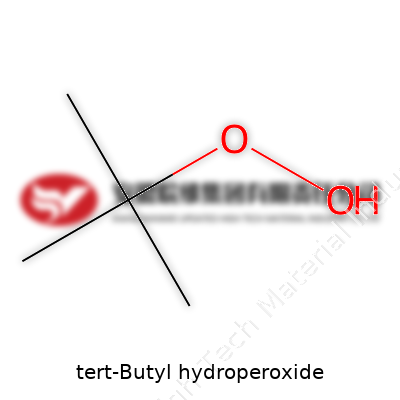
TBHP is an organic peroxide with the formula (CH3)3COOH. In the world of organic oxidants, it brings together two traits: enough muscle to get reactions moving, and a level of stability that does not make handling a white-knuckle experience. Commercial TBHP usually appears as a colorless liquid, sometimes diluted in water or alcohol to cut down on the risk of decomposition. Labs and factories rely on it for epoxidizing alkenes, oxygenating hydrocarbons, and recently, even for driving greener synthetic protocols. Not every peroxide can offer the same shelf life and versatility.
Physical & Chemical Properties
Straight out of the bottle, you notice a sharp, ether-like odor. At room temperature, the pure compound boils at roughly 35°C (95°F) under reduced pressure, but commercial mixtures commonly contain 70% TBHP in water, which helps tame both volatility and flammability. Its density sits near 0.92 g/cm3. It dissolves in organic solvents but also shows some stubbornness in water, leading to biphasic mixtures in certain prep work. As a hydroperoxide, it decomposes exothermically, so temperature control becomes critical as concentrations rise. The oxygen-oxygen bond may not look like a trap, but enough energy or impact can rapidly release oxygen gas, pushing this chemical up the risk charts compared to basic alcohols or ethers. Old bottles demand respect—peroxides are notorious for silent, unpredictable decomposition.
Technical Specifications & Labeling
Producers bottle TBHP in containers labeled as oxidizers and include the UN number 3109 for its stabilized forms. Typical commercial grades offer 70% aqueous solution, though specialty suppliers sell anhydrous material for advanced catalysis work. Labeling tends to spell out storage guidelines—cool, shaded places and isolated from heat or shock. Materials safety data sheets (SDS) cover the explosive risk, skin and eye hazards, and the importance of keeping the chemical sealed with vented caps. Most packaging uses amber glass or steel; plastic is strictly selected to withstand peroxide corrosion. Over the years, these specifications have grown stricter, not only from regulatory changes but also because enough small accidents taught everyone that cutting corners with peroxides never ends well.
Preparation Method
Standard industrial routes produce TBHP by reacting isobutane with oxygen in the presence of hydrocarbon catalysts, often under pressure. Chemists found that carefully controlling both temperature and oxygen flow can tip the balance between low yield and runaway decomposition. At the lab scale, older textbooks described adding dilute hydrogen peroxide to tert-butanol, but commercial producers stick to oxidizing isobutane, which scales up more economically. Either way, water forms as a byproduct, so drying steps or phase separations enter the workflow. Years of engineering have focused on improving both selectivity and safety—anyone in chemical manufacturing has stories about blocked lines, pressure spikes, and the endless tweaks needed to keep peroxide reactions running smoothly.
Chemical Reactions & Modifications
TBHP became famous for its workhorse role in epoxidation reactions, particularly with titanium, molybdenum, or vanadium catalysts. Those epoxides show up everywhere now, from medicines to industrial resins. The mild oxidizing ability of TBHP lets chemists oxyfunctionalize substrates like thioethers or secondary alcohols with less overoxidation than stronger reagents. It also plays a part in the metal-catalyzed oxidation of hydrocarbons, Baeyer-Villiger oxidations, and more recently, in certain photoredox or organocatalytic transformations. Some synthetic routes modify the tert-butyl group itself, swapping it for smaller or bulkier alkyl substituents in search of even more niche reactivity, but the classic TBHP handle remains a fixture. Finding the sweet spot of reactivity, safety, and product purity remains a major driver for ongoing reaction design.
Synonyms & Product Names
Chemists and buyers encounter TBHP under several guises: 2-methyl-2-propanol hydroperoxide, tert-butyl hydroperoxide, and t-BuOOH pop up in catalogs. Trade names—Aldrich, Sigma, and Acros—signal supplier differences, but the underlying chemical matches. Even folks outside chemistry circles may hear it called “organic peroxide solution” in broad industrial settings. Anyone dealing with supply chain knows that precise labeling can prevent costly mix-ups, especially now that safety regulations and customs checks demand clarity.
Safety & Operational Standards
Workplace safety with TBHP leans on standard operating procedures drilled into generations of lab techs and plant engineers. Direct contact burns skin and eyes; inhalation irritates the lungs. TBHP’s toxic and flammable nature makes proper ventilation, chemical-resistant gloves, and goggles standard gear. The dangers of accumulation or contact with organic combustibles force good housekeeping: peroxides like TBHP have powered more than a few lab explosions over the decades. Spillage, mixing with strong acids or reducing agents, or heat exposure can all kickstart decomposition. Labs that handle TBHP keep fire blankets, absorbent material, and emergency showers nearby. Staff training, clear labeling, and slow, careful transfers have saved more than one person from costly mistakes, and over the last two decades, digitized tracking has cut accidental double-storage or unwanted surprises.
Application Area
TBHP finds use on production lines and research benches where selective oxidation is king. Polymer makers rely on it to prepare epoxy resins and special coatings. Pharmaceutical chemists appreciate the clean product separation after epoxidation or oxygenation steps that would otherwise require strong, dirty mineral oxidants. Oil refineries and petrochemical outfits use TBHP to tweak fuel compositions, chasing performance upgrades and cleaner combustion. As new catalytic transformations get published every year, TBHP seems to stay part of the chemical toolbox—less harsh than ozone or potassium permanganate and less toxic than chromium(VI) chemicals. Some environmental chemists explore how TBHP-driven oxidation helps degrade persistent pollutants, aiming for “greener” clean-up methods that avoid heavy metals.
Research & Development
The last ten years have seen a flurry of work attempting to unlock more selective, energy-efficient uses for TBHP. Catalysis journals carry articles on metal–organic frameworks, earth-abundant metal catalysts, and enzyme-mimicking systems that turn TBHP into a precision tool for complex molecule creation. Some teams chase tandem reactions, letting TBHP oxidize one bond before another catalyst shapes a new structure. In sustainability circles, efforts focus on reducing byproduct waste and finding recyclable approaches to TBHP oxidation cycles. Computational and mechanistic studies now reveal more about the elusive transition states in TBHP reactions, aiming to minimize runaway side reactions or unexpected heat evolution. For scientists at both the bench and industrial scale, advances in TBHP chemistry often unlock new products or cost savings, pushing the whole sector forward.
Toxicity Research
Toxicologists have tracked health effects of TBHP for decades, cataloging the risks and comparing them to other organic peroxides. Animal studies point to tissue irritation, and at higher concentrations, more serious organ damage by inhalation or ingestion. The compound quickly penetrates skin, so spills demand immediate washing. Chronic low-level exposure appears less hazardous than with older, heavier-duty oxidants, but workplace monitoring standards still hold firm. Environmental agencies rank TBHP as acutely toxic but less persistent in water or soil—it tends to break down swiftly through oxidation and photolysis. Researchers focus on safer formulation and targeted neutralization, aiming to prevent TBHP spills from causing broader environmental harm.
Future Prospects
Looking ahead, TBHP’s value in selective oxidation keeps it relevant. Green chemistry and sustainable process goals challenge teams to improve both the catalyst and oxidant sides of the equation. Companies invest in process intensification, blending better process monitoring with safer reactor designs to scale TBHP reactions with lower risk and waste. New uses in fine chemical synthesis, environmental remediation, and bio-based substrate modification keep emerging. It feels likely that demand for TBHP will hold steady, if not grow, as more research teams focus on milder, cleaner oxidative transformations. Improving on safety, waste management, and process efficiency in TBHP handling stands as both a challenge and an opportunity for the next generation of chemists and engineers.
What Is It?
tert-Butyl hydroperoxide, often shortened to TBHP, stands as a clear, organic liquid with a strong odor. Most folks have never run into it outside of a chemistry textbook, but it moves a lot behind the scenes in factories and labs. It belongs to a class of chemicals called peroxides, famous for their reactive oxygen atoms. The structure of TBHP makes it a go-to tool for chemists, especially those working with industrial processes and lab research.
How Industry Uses TBHP
In the chemical industry, TBHP serves mainly as an oxidizer. Manufacturers love its strong punch. You’ll find it on assembly lines turning raw materials into glossy paints, smooth plastics, or stable rubber compounds. The world relies on oxidation reactions to create these products, and TBHP speeds things up or even makes them possible. For example, it helps produce special epoxy resins, a key ingredient in adhesives and coatings. The same property lets it kick-start polymerization, which means small chemicals join together in long chains, forming sturdy plastics that line pipes or strengthen construction materials.
TBHP turns heads in the world of pharmaceuticals, too. Drug manufacturers use it to transform molecules, often making drugs safer or more powerful. It does this by tacking on new groups to molecules or breaking apart stubborn bonds that won’t budge with weaker chemicals. Certain cholesterol-lowering drugs and antibiotics need TBHP at some point during their journey from a scientist’s workbench to your local pharmacy.
Lab Research and Synthesis
Any lab that runs experiments with organic chemicals keeps a close eye on TBHP. Researchers like it for its predictability. It reliably adds oxygen to compounds, which helps chemists test new ideas or build molecules too tricky to make using other methods. I’ve seen it power up reactions that once took days, cutting the wait to hours. That sort of efficiency adds up, whether you’re a university student or a PhD running complex research.
Risks and Safety Concerns
TBHP doesn’t mess around. It catches fire easily and breaks down in a way that can release harmful fumes. A small spill could turn dangerous. Factory workers and chemists wear gloves, splash-proof goggles, and sturdy coats when they handle it. Finding safer ways to store and move TBHP remains a challenge, and that matters. A warehouse accident could cost millions, not just in lost product, but in employee injuries or environmental damage. Regulations stick close—companies must follow strict rules to keep people and the environment safe.
Improving safety means investing in better training, tight equipment maintenance, and new packaging technologies. Some chemical companies experiment with stabilizers to stop TBHP from breaking down unexpectedly. Progress in this area doesn’t always draw headlines, but for the people who handle TBHP every day, it matters a lot.
Environmental Impact
TBHP breaks down naturally in air and water, but the process isn’t instant. If a big spill hits open ground or a waterway, wildlife faces steep risks. Fish, insects, and birds don’t have the safety gear people use. Waste disposal teams treat TBHP carefully, using incineration or controlled breakdown processes to keep it out of rivers and landfills. Environmental scientists push for better controls, tracking any leaks and urging stronger regulations.
Looking for Solutions
Chemists look for replacements with fewer risks, but few match TBHP’s punch or reliability at a low cost. Until a better option comes along, strict safety and environmental controls remain the best way forward. Investing in research may pay off, leading to greener chemicals that still get the job done. A safer, cleaner future often starts with small steps in labs and factories—TBHP and its alternatives offer a lesson in balancing progress with responsibility.
The Big Concerns with tert-Butyl Hydroperoxide
tert-Butyl hydroperoxide (TBHP) might sound like something out of a chemistry textbook, but its reputation in the lab world feels much more serious. Folks use TBHP as an oxidizer in lots of organic chemistry processes, but this clear liquid doesn’t play around—anybody around it needs to respect its danger. TBHP can catch fire quickly, and even a small slip-up can lead to nasty burns or a lab incident that scars careers and lives. Reading pages of technical bulletins doesn’t drive the lesson home like seeing scorched countertops or ruined protective coats. This is one of those chemicals that feels manageable until it isn’t.
Personal Protective Strategies
My first experience with TBHP taught me what “personal protective equipment” really means. Gloves that resist permeation matter. Nitrile is a good option, but not all gloves block these small molecules. Double-gloving offers extra comfort, but the bigger point is: never skip eye protection. TBHP spits and splashes if mishandled, attacking corneas far faster than you’d expect. Face shields and goggles both help. Cover skin head-to-ankle with lab coats and long pants—this isn’t the moment for shortcuts. Street clothes and shorts invite regrets if a drop goes astray.
Ventilation and Storage
No fume hood, no TBHP. Every chemist I know stores TBHP in tightly closed bottles—never glass-stoppered. Vapors build, pressure grows, and glass might pop off. That’s not theory; it happens. A good hood keeps those vapors away from your lungs. It makes all the difference, especially during transfers. No vent, no open handling. Keep storage cool, and keep the container upright. TBHP decomposes quicker at higher temperatures, which ups the risk for pressure buildup. Only employees with specific training should open the storage area, and nothing sits with TBHP except other compatible oxidizers.
Safe Movement and Disposal
Carrying TBHP across a lab takes nerve and the right tools. Transport in secondary containers prevents heartbreak if the main vessel leaks. Practice the route, clear obstacles, walk—never run. That sense of focus isn’t paranoia; it’s how you stay employed and injury-free. For spills, specialized absorbent pads work best. Water won’t tame a spill, and flammable solvents just make things worse. Small drips get cleaned up right away because they evaporate and hazard levels spike quickly. Used TBHP or contaminated items demand special disposal containers, clearly labeled for hazardous oxidizing waste. Regular trash or drains aren’t options.
Preparing for the Worst
Emergency procedures save lives and reputations. Safety showers and eye-wash stations aren’t for decoration. Know the route, and check that they function every week. Fire extinguishers rated for chemical fires sit nearby, not in another room. Colleagues need to know the signs of TBHP exposure—headaches, dizziness, burning skin—because self-diagnosis doesn’t always work in a real mess. Training pays off here. Employees shouldn’t touch TBHP without hands-on training and reviews at regular intervals. Written policies matter, but drills and real talk stick in people’s memories longer. TBHP doesn’t forgive carelessness, but methodical respect for its risks keeps science moving forward safely.
Keeping Perspective with Lessons Learned
No chemistry breakthrough or industrial process justifies sloppy TBHP handling. I’ve seen mentors and new hires alike grip their bottles a little tighter after hearing what’s possible if things go wrong. That kind of respect isn’t dramatic; it’s a habit worth forming, one day and mistake at a time. Good safety grows from good habits, not from luck. TBHP serves as a reminder: chemicals aren’t scary when you know their story and prepare for their risks. That’s real expertise in action.
Understanding the Hazards
tert-Butyl hydroperoxide shows up in many chemical labs, especially where oxidizing reactions happen. It’s powerful, and that power can turn dangerous if the storage method doesn't reflect respect for its volatility. Many have heard stories of injuries and accidents all because a bottle sat too close to a heat vent or because incompatible materials ended up together in the same storage locker. I remember, as a student, seeing a container bubble after it sat in direct sunlight; lucky for all of us, someone spotted it in time.
Temperature Makes a Difference
This chemical breaks down and even explodes with a little heat or a loose cap. The smart money goes toward keeping it cool, ideally somewhere below regular room temperature, without ever freezing it. Refrigerators that don't have unrelated substances inside prevent cross contamination or leaky containers sneaking in next to lunch bags. Don't believe anyone who says "room temperature is fine"—even a power outage on a summer day can be enough to push things over the edge.
Choose the Right Container
tert-Butyl hydroperoxide belongs in a solid, airtight container—never metals, never glass with weak seals, and never near sharp objects. Containers should block light. Dark glass or metal cans lined with compatible plastic work better than clear plastics or open-mouthed jars. Someone once tried using a food-grade plastic bottle and the consequences weren’t pretty: cap failure and fumes that put the whole room at risk. Manufacturer containers usually already fit the bill, so transferring product is a risky shortcut.
Keep It Separate
This chemical creates trouble around acids, bases, and strong reducing agents. In a shared lab fridge, confusion about what sits next to each other causes more problems than people care to admit. A clear label—including hazard warnings—cuts down on mistakes. Staff training and regular checks help too. Storage cabinets with their own ventilation work best for larger quantities. If you can lock the cabinet and keep a record of access, hazards drop even more.
More Than Just Following Rules
Regulations spell out requirements, but rules don’t replace common sense. Don’t store tert-Butyl hydroperoxide near exits, electrical panels, or high-traffic areas. Take special care during inventory days—nothing falls through the cracks. Clean up spills immediately, with the right neutralizers and protective equipment. Fire suppression nearby isn’t negotiable. And emergency contacts posted right by the storage area have saved lives more than once in my own experience.
Lasting Lessons from the Lab
In my years working with chemicals, the difference between a close call and a catastrophe often boiled down to proper storage. Reading up on the right protocols made me appreciate just how quickly things can go wrong. Don’t trust luck to keep you safe. tert-Butyl hydroperoxide rewards respect with quiet reliability, but only if you give it the space, temperature, and security it demands. Keeping up with best practices isn’t just about rule-following—it’s about protecting everyone who comes through the door after you.
The Formula and Structure You See in Practice
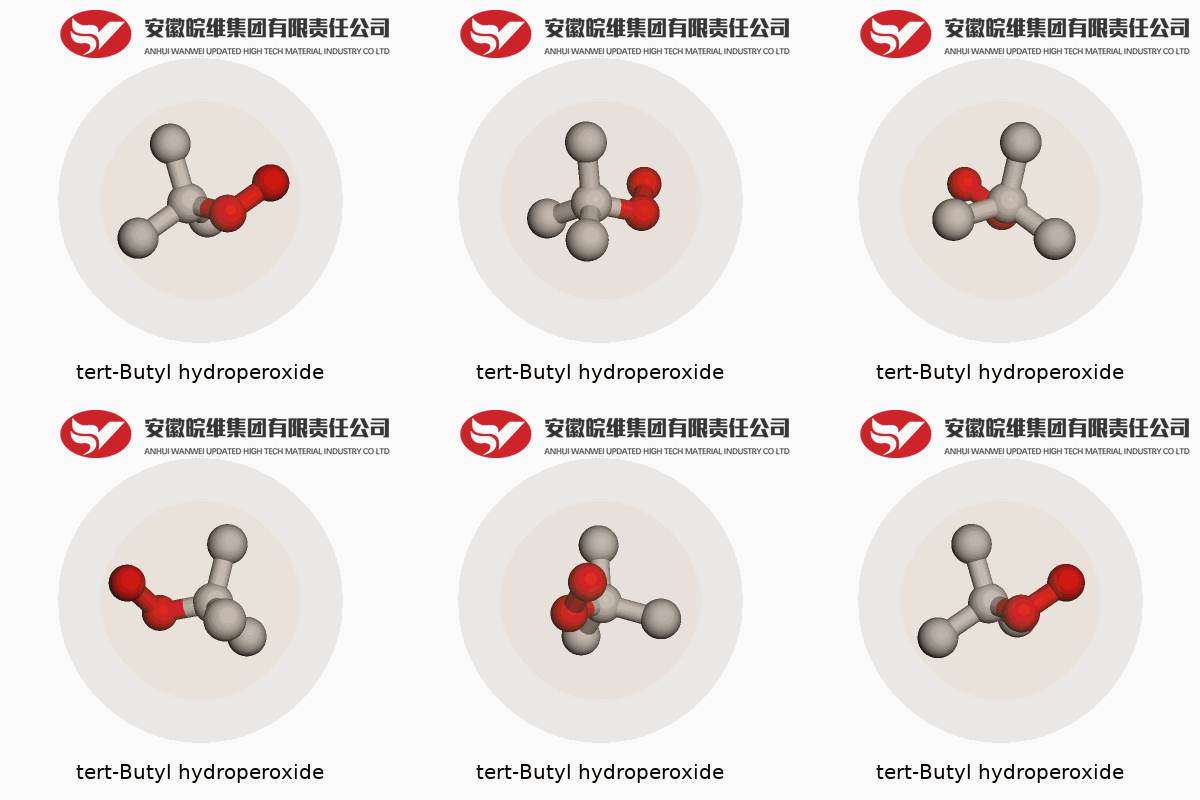
Working in laboratories and industrial plants, I’ve had reason to keep tert-butyl hydroperoxide on my radar. Its chemical formula, C4H10O2, reflects both its origins from simple hydrocarbons and its role as an organic peroxide. The blueprint looks like this: one hydroperoxy group connected to a tert-butyl group. This arrangement isn't just some academic curiosity; it makes the compound much more than just another set of letters on a label. The hydroperoxide group turns tert-butyl hydroperoxide into an effective oxidizer, useful in all sorts of chemical processes.
Industry Sees More Than Just a Formula
Tert-butyl hydroperoxide isn’t a household name, but it shapes processes found behind the scenes in industrial chemistry. Its ability to deliver oxygen in chemical reactions supports both large-volume manufacturing and the synthesis of specialty chemicals. Companies producing plastics, pharmaceuticals, and specialty resins all have a stake in its reliability. Even the adhesives in automotive and aerospace owe something to what C4H10O2 offers. Workers and engineers rely on its consistent performance, whether they’re scaling up a new plant or troubleshooting a reaction that refuses to play nice.
Handling and Safety: Lessons Learned in Real Workplaces
Spend much time in a plant, and the risks tied to organic peroxides get personal. Tert-butyl hydroperoxide demands respect for its reactivity. Chemists and safety specialists know that the same traits making it useful also create danger if mishandled. Skin and eyes feel its burning sting on contact; vapors don’t do lungs any favors either. Temperatures climbing above safe limits can trigger runaway decompositions—generating heat, fumes, and sometimes even explosions. Our daily routines include double-checking temperature controls, using chemical fume hoods, wearing gloves and goggles, and making sure every storage drum is kept below the manufacturer’s recommended maximum temp.
Regulatory bodies like OSHA and the European Chemicals Agency push for strict labeling, training, and spill plans. From personal experience, walking through a plant where chemical hygiene is taken seriously gives a kind of peace of mind that training alone can’t deliver. It’s a real difference-maker.
Environmental Responsibility and Looking Ahead
People raising concerns about organic chemicals in waterways or the air have solid science behind them. C4H10O2 doesn’t just vanish; spills and improper disposal can harm aquatic life and create issues for local water treatment. In places I’ve worked, responsible usage means not only securing storage tanks, but also recycling or properly neutralizing waste. Opportunities exist to keep improving containment, driving manufacturers toward safer solvent systems and better environmental controls. Waste treatment methods like reducing unused material, recycling spent solutions, and neutralizing residuals before they hit the drain offer proven benefits.
Innovation: Using Knowledge to Make Industry Safer
Seeing chemists, engineers, and safety managers working together to improve peroxide management stands out. Newer monitoring sensors help catch overheating or contamination faster. Automation keeps handling safer. Data on historical incidents—when shared openly—nudges the whole industry to anticipate failures instead of just reacting. The formula C4H10O2 might look simple, but the mix of safety, innovation, and real-world experience shapes its journey from lab bench to finished product. Shared responsibility and attention to detail push the field forward, keeping people and the planet safer along the way.
What People Should Know About Tert-Butyl Hydroperoxide
Tert-butyl hydroperoxide has been used in labs and some manufacturing sites for years. This clear liquid helps speed up chemical reactions or kicks off plastics production. Many don’t think twice about chemicals found in workplaces, but this one carries some real risks that many overlook.
Direct Effects on Human Health
Drawing on years spent handling chemicals in research settings, I can say tert-butyl hydroperoxide ranks high on the list of compounds I treat with extra care. The stuff has a sharp scent; even brief whiffs can sting your nose and eyes. It can burn your skin if spilled. Reports and safety data warn about its role as a severe eye and respiratory irritant. There have been accounts where accidental exposure led to coughing, trouble breathing, and rashes. More serious incidents can bring on lung inflammation or chemical burns.
Long-term data remain scarce, but repeated exposures seem to push the risks higher. Some animal tests point toward potential kidney or liver damage with ongoing contact, though researchers need more robust studies to confirm this for humans. According to the US National Institute for Occupational Safety and Health (NIOSH), concentrations above 2 parts per million in air cross safe workplace thresholds. That number stays much lower than what factory workers might face if air systems fail or storage rules aren’t followed.
Risks to the Environment
Beyond health effects, tert-butyl hydroperoxide creates plenty of headaches for the environment. The chemical doesn’t stay put once it gets loose. It can seep into soil and water if companies dump it or accidents spill it. Fish, insects, and plants in water streams may feel the brunt long before anyone notices. Animal studies have found the compound can be quite toxic to aquatic life, even in small amounts.
Laboratory disposal rules treat tert-butyl hydroperoxide as hazardous waste for good reason. Pouring it down drains can bring ugly surprises further downstream, hurting water quality and putting extra strain on treatment plants. It may react with other chemicals to make even nastier byproducts in the process.
Reducing the Hazards: Practical Solutions
Plenty of folks end up near this chemical, so the best approach often boils down to real-world safety habits. In my own lab years, we leaned heavily on sealed bottles, hands-on safety training, and fresh air systems that kept vapors below dangerous levels. Using chemical fume hoods became second nature. When accidents hit, anyone exposed washed off in seconds and always told a supervisor.
Workplaces that use tert-butyl hydroperoxide should keep staff educated on its dangers, push for glove and goggles use, and upgrade ventilation where possible. Storage matters, too: heat turns this compound unstable, so keeping bottles cool and away from sunlight makes a difference.
Laws such as the US Resource Conservation and Recovery Act guide hazardous waste management. Compliance helps, but enforcement and daily vigilance stand as the real backbone of risk reduction. New efforts to switch to safer alternatives could shrink these problems even further. Industry has made moves in that direction, and more research on green chemistry looks set to shake up how we handle risky compounds in the future.