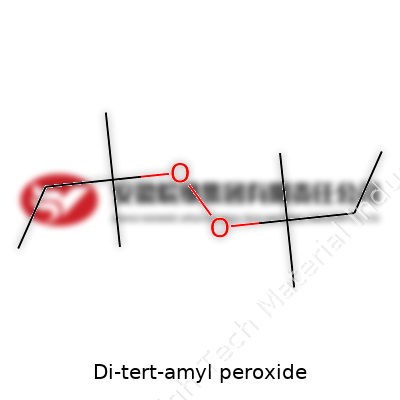
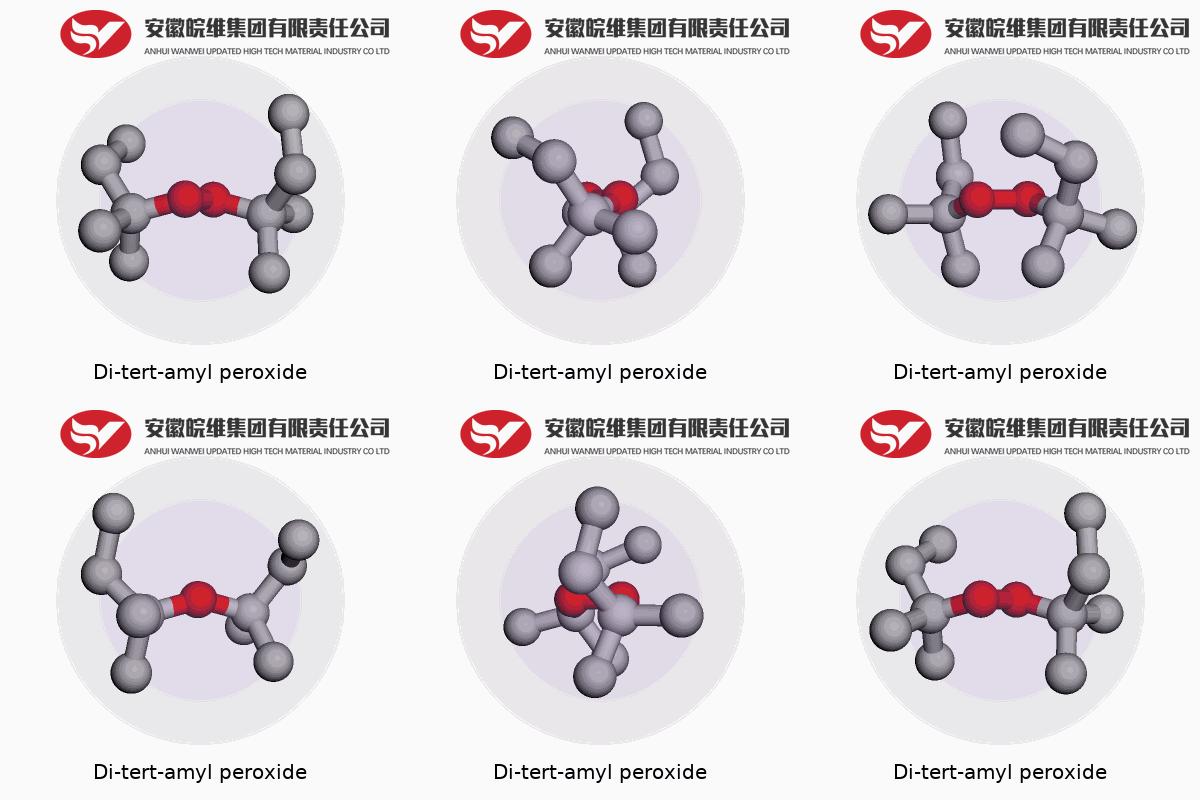
Di-tert-amyl Peroxide: From Early Discoveries to Current Advances
Historical Development
Chemists have always been fascinated by the behavior of peroxides, searching for new ways to initiate polymerization and trigger efficient free radical reactions. The story of di-tert-amyl peroxide began in the mid-20th century, when researchers sought alternatives to established organic peroxides like benzoyl peroxide and di-tert-butyl peroxide. Laboratories explored molecular structures that promised higher decomposition temperatures and improved safety. Di-tert-amyl peroxide emerged through methodical experimentation as an organic peroxide with unique balance—strong enough to drive tough reactions forward, yet less volatile than early cousins. Synthetic chemists and industrial technologists continued to refine its preparation and handling, sharing best practices in trade journals and conferences. By the late 1980s, the technical community recognized this peroxide as an agent that could perform under more demanding conditions, rewarding those in paint, plastics, and elastomers who needed robust initiators. This historical persistence brought di-tert-amyl peroxide from bench-scale curiosity to global industrial staple, a chemical whose journey mirrors the dogged optimism of applied science.
Product Overview
Di-tert-amyl peroxide takes center stage as a high-purity liquid initiator, colorless to pale yellow, supplied in steel drums or special polymer-compatible packaging. This material, known to suppliers by alternative names such as DTAP or 2,5-dimethyl-2,5-bis(tert-amylperoxy)hexane, fits the bill for both specialized manufacturing lines and research projects. Producers in North America, Europe, and Asia keep strict tabs on its stability, working to minimize decomposition and shipping risks. End users keep it locked away from accidental ignition, aware of its potential to rapidly give off gases and energy. Certifications, technical datasheets, and operator training reflect the serious regard commanded by this product in laboratories and industrial facilities.
Physical & Chemical Properties
Examining di-tert-amyl peroxide, you notice its moderate boiling point and a strong, somewhat pungent odor. The molecule weighs in around 218 grams per mole, with a density that keeps it close in behavior to familiar organic solvents. It dissolves best in hydrocarbons and remains stubbornly immiscible in water—something that complicates cleanup and containment. The decomposition point lands between 110°C and 130°C, lending reassurance for many polymerization conditions, but always demanding careful temperature control. Peroxide content and assay require precision; even a brief lapse in purity tanks could mean the difference between safe operations and an unplanned exothermic event.
Technical Specifications & Labeling
Batches leave factories with tight tolerances on active oxygen content, moisture, and acidity. Labels warn of explosive potential and sternly list hazard pictograms: oxidizer, corrosive, and toxic. Shipping manifests reference UN numbers and detailed emergency response guidelines, in line with regional and international chemical regs. Storage guidance calls for cool, dry, and well-ventilated spaces far away from sunlight, acids, or potential fuel sources. Every lot carries documentation not just for quality assurance, but also for full traceability—no amount of paperwork is too much when working with hazardous substances like this peroxide.
Preparation Method
Manufacturers commit to process rigor. Synthesis of di-tert-amyl peroxide starts by reacting tert-amyl hydroperoxide with the appropriate acyl donor or peracid under tightly controlled temperatures and pH levels. Skilled workers manage continuous addition and mixing procedures, often under inert gas blankets to keep oxygen and moisture away. After reaction and phase separations, distillation steps remove unreacted starting materials—yielding multi-liter batches of clear, highly concentrated product. Waste minimization and recycling protocols reflect both financial and regulatory pressures, as disposal of spent peroxide residues invites complex compliance.
Chemical Reactions & Modifications
Chemists treasure di-tert-amyl peroxide for its controlled free radical generation. It cracks open alkene monomers, driving chains to grow in polymers from common plastics to specialty elastomers. This peroxide also shines as a crosslinking agent, improving mechanical strength and thermal resistance in rubber compounding. Garden-variety hydrogen abstraction, epoxidation, and oxidative cleavage reactions get a boost from its tailored decomposition profile. Modified peroxides—for example, by introducing aromatic substituents or stabilizing side chains—help researchers manipulate activity, half-life, and compatibility with diverse substrates. The possibilities for engineered reactivity encourage further laboratory tinkering.
Synonyms & Product Names
Suppliers and technical documents list di-tert-amyl peroxide by several aliases. “DTAP” serves as a popular shorthand, but longer chemical names like 2,5-dimethyl-2,5-bis(tert-amylperoxy)hexane or 2,5-dimethylhexane-2,5-dihydroperoxide turn up in patents and regulatory listings. Some catalogs just call it “tert-amyl peroxide,” though that can mislead less experienced technicians toward the wrong material. Brand names differ across continents, with each producer stamping unique batch numbers and labels for legal compliance and customer recall readiness.
Safety & Operational Standards
Handling di-tert-amyl peroxide never becomes routine. Workers put on chemical splash goggles, flame-retardant lab coats, and neoprene gloves each time they open a drum. Safety showers and eyewash stations must be nearby. Written procedures cover slow addition rates, monitoring of temperature and pressure, as well as swift neutralization protocols in case of spills or leaks. Regulatory agencies enforce maximum allowable storage volumes, restricted access zones, and robust ventilation to limit accumulation of potentially explosive vapors. Accidental mixing with incompatible organics, metals, or acids risks fire or explosion. Teams drill for emergency shutoff and evacuation, knowing the peroxide’s energetic chemistry leaves no room for error.
Application Area
Polymer scientists, industrial chemists, and coatings engineers look to di-tert-amyl peroxide for its precise initiation temperature. Plastic extruders exploit its characteristics to make high-molecular-weight polyethylene, where consistent start-up and shut-down cycles drive plant economics. Rubber manufacturers rely on this initiator to crosslink EPDM and silicone rubbers, fortifying weather resistance in automotive seals and cable insulation. It finds use in wire and cable sheathing, adhesives, paints, and inks, especially those where end-product stability demands careful control of radical initiation. The peroxide’s reliability lets process engineers push cycle times shorter and tune reaction yields higher. Many in the industry owe their product consistency to the rigor of di-tert-amyl peroxide–based systems.
Research & Development
Innovation thrives on the bench and pilot plant alike. Chemists engineer di-tert-amyl peroxide derivatives seeking better shelf life or custom activation temperatures. Research teams run kinetic analyses to predict radical lifetimes and byproduct profiles under realistic plant conditions. Academic groups study mechanisms at the atomic level, using everything from spectroscopy to computational modeling. Sustainability efforts lead to bio-based feedstocks or process modifications that reduce environmental footprint. Ongoing grants focus on alternate crosslinking methods for medical polymers or low-temperature-cure coatings, opening new ground for peroxide chemistry. Patent filings hint at evolving fields from smart materials to reusable catalysts.
Toxicity Research
From the earliest applications, the toxicity of di-tert-amyl peroxide drew attention. Inhalation, skin contact, and accidental ingestion bring risks ranging from irritation to more severe systemic effects. Occupational exposure studies identify dose limits for short- and long-term contact, revealing insights into absorption, metabolism, and excretion patterns in animal models and workers. Regulators reference peer-reviewed toxicology to set threshold limit values and emergency guidelines. Studies on aquatic environments probe degradation pathways and persistence, aiming to curb discharge into natural water bodies. Despite modern safeguards, risk remains real, urging ongoing vigilance in monitoring, containment, and personal protective measures for everyone from plant operators to environmental cleanup crews.
Future Prospects
Applications keep rolling out as the world’s demand for tailored plastics, adhesives, and rubbers grows. With new challenges in sustainability, scientists look for ways to make di-tert-amyl peroxide from greener building blocks and to limit hazardous byproducts. Technology transfer from the lab to full-scale plants promises gains in efficiency and resource use, just as digital controls automate the fine handling and reaction triggering that this peroxide demands. Regulatory pressure grows, pushing companies to offer full life-cycle documentation and to invest in safer alternatives or containment. So long as polymer processing stays central to daily life, this compound will likely stick around—evolving, pushed by new research and the determined pursuit of better materials.
Real-Life Purpose
Every now and then, a chemical like di-tert-amyl peroxide shows up, usually hiding deep inside manufacturing plants or research labs. This isn’t a name you see at the supermarket or even in most science classrooms, so it makes sense to wonder what the fuss is about. Fact is, this stuff turns out to be a workhorse for industry, especially anywhere plastics and rubbers matter.
Kickstarting Chemistry
Di-tert-amyl peroxide acts as a radical initiator. That might sound technical, but it’s about getting chemical reactions started. In the plastics world, there are big machines spinning out stuff like polyethylene (think stretch wrap or milk jugs) and polypropylene. These plastics don’t just pop out of the ground; companies use chain reactions—polymerizations—to build them up. Di-tert-amyl peroxide gives reactions the nudge they need by breaking apart under heat and releasing radicals that get things moving. Factories use it because it works at specific temperatures, with a good deal of control. That means less waste and more predictable quality.
Rubber and Curing
Another big lane for this chemical comes with rubber. Tires logging thousands of miles, seals keeping engines together, and hoses in harsh weather—all need rubber that’s tough and able to flex without cracking. Di-tert-amyl peroxide helps “cure” rubber. Instead of staying sticky and soft, raw rubber gets cooked carefully with peroxides. Crosslinks form inside the material, kind of like weaving threads into fabric. End result? Tires that can handle potholes, or gaskets that don’t leak under pressure.
Worker Safety and Environmental Care
Working around these chemicals always brings up safety. Di-tert-amyl peroxide isn’t something you breathe in or splash on your skin without worry. It packs a punch, especially if exposed to heat when not under control. Many workers need gloves, goggles, and good vents. There have been rare but serious incidents from improper storage. Good training and clear protocols lower these risks.
Waste from manufacturing sometimes escapes into local water or landfill, so companies have to monitor and capture leftovers. Most places push for strict reporting and regular checks. The world keeps moving toward greener methods. Some newer additives aim for faster breakdown or use in closed systems, with most of the byproducts getting recycled.
Better Solutions For Tomorrow
As someone who’s seen older factories converting their processes, I notice more focus on alternatives. Research looks for initiators that don’t need so much energy or are less likely to stick around in the environment. Some projects experiment with enzymes or greener chemical cousins that break down more easily. Still, for high-stress products like industrial rubbers or special plastics, di-tert-amyl peroxide’s reliability keeps it in rotation—for now.
It boils down to trade-offs. Manufacturers and regulators keep updating safety guidelines, aiming for fewer accidents and greener waste. Keeping an eye on emerging tech and new research could shift things, but the main uses in making plastics and rubbers strong and dependable keep di-tert-amyl peroxide an important piece of modern industry.
Understanding the Risks Behind the Name
Di-tert-amyl peroxide doesn’t draw much attention outside chemical manufacturing and research labs, though its dangers shouldn’t slip anyone’s mind. This isn’t an everyday peroxide – it carries a real risk of catching fire or exploding if treated with anything less than full focus. For people working with this compound, safety gear and strict habits matter just as much as knowing the rules in a high-voltage workspace.
Personal Protection Can’t Be Overlooked
My early years in a polymer lab taught me quick that heavy-duty chemicals don’t forgive mistakes. Regular gloves didn’t cut it, so we always grabbed nitrile or neoprene styles, which kept solvents and peroxides from soaking in. No shortcuts around goggles, either. Face shields got a lot of use, especially during weighing and mixing, since one splash meant a trip to the medical bay. Some might think lab coats do the job, but full coverage with a flame-resistant coat (plus long pants and closed shoes) was non-negotiable. The risk of unexpected decomposition left everyone double-checking their sleeves, fasteners, and eyewear.
Storage: Out of Sight, Top of Mind
Leaving di-tert-amyl peroxide sitting out or stuffing it on a crowded shelf invites trouble. We kept smaller amounts in original containers, surrounded by absorbent material, in explosion-proof refrigerators. Sunlight and heat won’t just degrade this stuff – they might send it off unexpectedly. At one plant, confusion about storage temperatures almost caused a warehouse fire, so the lesson stuck: a dry, cool, and well-ventilated spot stands between normal workdays and disaster. Safe storage doesn’t end with temperature. Strong acids, bases, and metal salts kick off dangerous breakdown reactions, so everything sat apart, far out of reach from potential triggers.
Handling and Disposal: No Room for Guesswork
Preparation makes all the difference. Nobody in my teams ever opened new bottles without working in a fume hood, since the vapors punch through air quality and linger around workbenches. Static sparks or metal tools could be all it takes for ignition, so only non-sparking spatulas and grounded containers belonged in the same room. Since chemical burns and inhalation injuries happen fast, there were always emergency showers and eyewash stations just a dash away from the work area.Disposal gave everyone pause, too. Sending leftover peroxide down the drain or mixing it with general waste causes more problems than it solves. We always paired up, checked protocols, and used only approved disposal procedures, usually involving staged dilution with a compatible solvent before handing it over to a certified chemical waste handler. Skipping paperwork means regulators and safety officers come knocking, and nobody wants to face those fines or risks.
Training and Vigilance Matter
After years in the field, I realized that safety rules live and breathe through the people applying them. Regular drills, real chemical emergency scenarios, and a culture that values speaking up about potential shortcuts or mistakes save more injuries than the fanciest equipment. Even small lapses or misunderstandings about the power of compounds like di-tert-amyl peroxide can bring a workflow to a halt and put lives on the line. Learning from close calls—mine and others’—colors every decision with a sharper edge and more respect for every bottle lining the storage shelf.
Understanding the Chemical’s Personality
Di-tert-amyl peroxide stands out for its use in making plastics flexible, and its job often keeps it behind the scenes. This chemical, though not as headline-grabbing as others, commands respect. Anyone working with it quickly learns that its storage conditions are far from casual. One mistake in how it’s kept, and the safety risks climb. Peroxide compounds have a reputation: sensitive to heat, shock, and other triggers. Most accidents involving peroxides can be traced back to improper storage. That tells us plenty about the need for clear rules and real diligence.
Why Temperature Makes All the Difference
Heat changes everything. Di-tert-amyl peroxide doesn’t ask for a freezer, but it has little patience for warm warehouses or sunlight streaming in through a window. Even a rise of a few degrees above its recommended temperature range and the decomposition risk grows. This isn’t a gradual fade—peroxides can go from safe to dangerous in alarming bursts. Publicly available data puts safe storage below 30°C (86°F), though many facilities prefer closer to 20°C just to play it safe.
Here’s why that matters: a 2020 review by the Center for Chemical Process Safety found that improper temperature control topped the list for peroxide incidents globally. Facts like these matter more than theory. Experience dealing with peroxides confirms the power of a reliable thermometer and an alarm system that doesn’t lie.
Shelter from Light and Sparks
Sunlight never helps this chemical. Even strong indoor lighting can push it toward instability. The answer sounds simple—dark storage, away from windows or see-through panels. But take a walk through many factories and too often, shortcuts appear: uncovered bulbs, skylights, unsecured loading bays. All these add up, especially over stretch of months. Sparks pose a silent risk. Everyone on a shop floor understands that mixing peroxides and a stray ignition source—worn wires, friction, static discharge—creates a recipe for disaster. Keeping storage rooms free from open switches, static materials, and the wrong kind of surrogate heating is non-negotiable.
Why Isolation Works Better Than Luck
One of the real blind spots happens when chemicals get stored side by side, with different companies or crews treating every drum and bottle as someone else’s problem. Di-tert-amyl peroxide demands its own space. Flammable liquids, acids, or reducing agents in the same corner up the chance of trouble. Smart companies assign dedicated storage lockers or rooms, lined with spill containment trays and non-sparking tools. Safety audits back up this habit, catching small mistakes before they speed up.
Solutions for Safer Handling
Facts and checklists only go so far unless people working with these chemicals get proper training. Storage rules stick best when backed by drills and scenario-based practice, not just printed posters. Installing temperature logs with real-time alerts helps catch creeping problems. Facilities with solid safety records always show two things: regular inspection routines and clear separation between incompatible substances. After spending time in several chemical plants, it’s clear that inspections and honest day-to-day vigilance serve better than any manual left unread on a shelf.
The Takeaway: Safety Relies on Everyday Habits
Leaving di-tert-amyl peroxide storage up to chance doesn’t just break guidelines; it risks lives and reputations. In my years around chemical storage, the sites that put real thought into location, temperature, and training never face the same emergencies as those that treat these rules as afterthoughts. It’s not high-tech mystery—just paying attention, using the right equipment, and making safety the normal way of doing things.
Everyday Work with Peroxides
Opening a bottle of di-tert-amyl peroxide for the first time can be nerve-wracking. Memories come back of training days in the lab, strict lectures about organic peroxides, and burned-in safety posters featuring flames and ruined gloves. Di-tert-amyl peroxide, a chemical widely used as a polymerization initiator and cross-linking agent, demands respect from anyone who stores or uses it.
Flammability: Not a Minor Concern
No one has to look far to spot the warnings. Di-tert-amyl peroxide lights up easily under the wrong conditions, and once burning, becomes difficult to control. Common sense says—if a chemical can break down fast and release energy, it brings fire risk. This compound sits in the same family as di-tert-butyl peroxide, famous for its aggressive flammability. Even a tiny contamination or trace of metal can boost the rate of decomposition and send it over the edge.
Regulations don’t mince words. The U.S. Occupational Safety and Health Administration (OSHA) and the European Chemicals Agency (ECHA) highlight that di-tert-amyl peroxide qualifies as an organic peroxide: Type F. It needs temperature control and specific storage design, just like other risky chemicals. Flammable liquid placards and hazard communication come standard in every facility handling it.
Explosive Hazards and Unexpected Surprises
Years of chemical research remind me: Never let your guard down with peroxides. Di-tert-amyl peroxide doesn’t need a spark to start breaking down. Exposure to heat, friction, or accidental impurities can turn a harmless bottle on the shelf into a pressure bomb. Decomposition can speed up if ventilated poorly, producing gases fast enough to rupture sealed containers. Accidents sometimes stem from forgetting small things—like storing a bottle too close to a light fixture or transporting it with spilled flammable solvents.
A common trait of peroxides involves their double-edged nature. They prove useful in labs and factories for starting chemical reactions, but mistakes with temperature or mislabeled containers can lead to fires, explosions, and toxic fumes. The Chemical Safety Board (CSB) and National Fire Protection Association (NFPA) both log yearly incidents attributed to organic peroxides.
Key Factors for Safe Handling
Never rely on luck or ordinary storage protocols. I once saw a pallet of peroxides left out near a sunny window; by the end of the afternoon, the bottles softened, and the air hung thick with a sweet, pungent odor—a clear sign of decomposition. Instead, storage should stick to cool, dry, well-ventilated areas, kept far from combustible materials and separated from sources of heat. Specialized safety refrigerators become essential for labs working with peroxides every day.
Personal protective equipment (PPE) stops some hazards, but protection starts with information. Teams that keep their safety data sheets handy, label everything clearly, and follow strict transfer procedures catch problems early. Routine inspections matter just as much as emergency protocols.
Reducing the Risk—What Works
Chemical firms have turned to stabilizers and dilution to reduce the risk, offering commercial di-tert-amyl peroxide in safer forms, blended with inert solvents. Still, downstream users must check every shipment and only order as much as needed for active projects. Disposal shouldn’t wait until the last second, since degradation lowers stability over time.
Training stands as the number one defense. Peers who review procedures together avoid almost every major incident. Respect for the hazards surrounding di-tert-amyl peroxide spreads through day-to-day conversations, shared checklists, and alerts about near-misses. If a chemical can catch fire easily and explode, complacency has no place nearby. That’s the lesson written on every hazmat placard found next to peroxide containers: treat with urgency, work with vigilance, and don’t take shortcuts.
Understanding the Chemistry
Anyone who’s handled chemicals like di-tert-amyl peroxide knows the question about shelf life pops up for a good reason: safety and performance depend on it. Di-tert-amyl peroxide falls into the organic peroxide family, notorious for sensitivity to heat, light, and contamination. This stuff won’t announce its degradation. Performance might drop, or in a worst-case scenario, it could act unpredictably. Based on industry documentation and experience from handling such materials, unopened di-tert-amyl peroxide stored between 2°C and 8°C, away from direct sunlight and sources of ignition, typically lasts twelve months. After that, risks and costs escalate by the day.
Real Consequences of Pushing Limits
Some believe chemicals last as long as the bottle stays sealed and the label isn’t curling up. Reality looks different. Peroxides like di-tert-amyl aren’t like a bag of rice—time and temperature chip away at their purity and stability. A study by the European Chemicals Agency documents increased risk of hazardous decomposition once organic peroxides pass their recommended shelf life. I learned this the hard way after a batch of out-of-spec material compromised a polymerization run. Lost time and money made the lesson stick: shortcuts cost more in the end.
Factors That Cut Shelf Life Short
Not every drum spends its life in ideal conditions. Minor changes in temperature or accidental opening invite moisture or airborne particles, which can trigger slow decomposition or violent reactions under certain conditions. Past chemical spills taught me that a peroxide’s worst enemy is complacency with storage and labeling. Each transfer or repackaging event bumps up the hazard, which is why regulatory guidance requires regular review and clear dating of every container.
The Human Element
Chemicals don’t wait. Staff turnover or poor stock management can leave old product hiding at the back of storage shelves. More than once, I’ve walked into storerooms only to discover yellowed documentation or unlabeled containers. Someone always has a story about the unlabeled drum that showed up on the yearly stocktake. Regular audits, coupled with digital inventory systems, reduce that risk, but there’s no complete substitute for a vigilant set of eyes.
Solutions That Work in the Real World
Relying on strict storage practices beats guessing games. Installing temperature loggers and keeping a written record of every batch’s arrival date tightens quality control. Disposal programs for expired or suspect peroxides keep hazardous surprises off the production line. Larger companies turn to rotating inventory policies—first-in, first-out, no exceptions. Training every technician who handles these chemicals goes further than any written protocol. I remember sitting through another safety update and rolling my eyes, but statistics from the National Fire Protection Association show the sharpest drop in accidents in teams where everyone knows how to spot old or mishandled peroxides.
Bottom Line for Safe Use
Twelve months marks the upper bound for di-tert-amyl peroxide under perfect storage. Past that date, risks far outweigh any desire to save money or resources. Record-keeping, environmental controls, and knowledgeable staff make the difference between safe handling and facing a costly, even dangerous, incident. Shelf life in chemical storage isn’t just a guideline; it’s the foundation for safe and reliable results in the lab and the plant.